
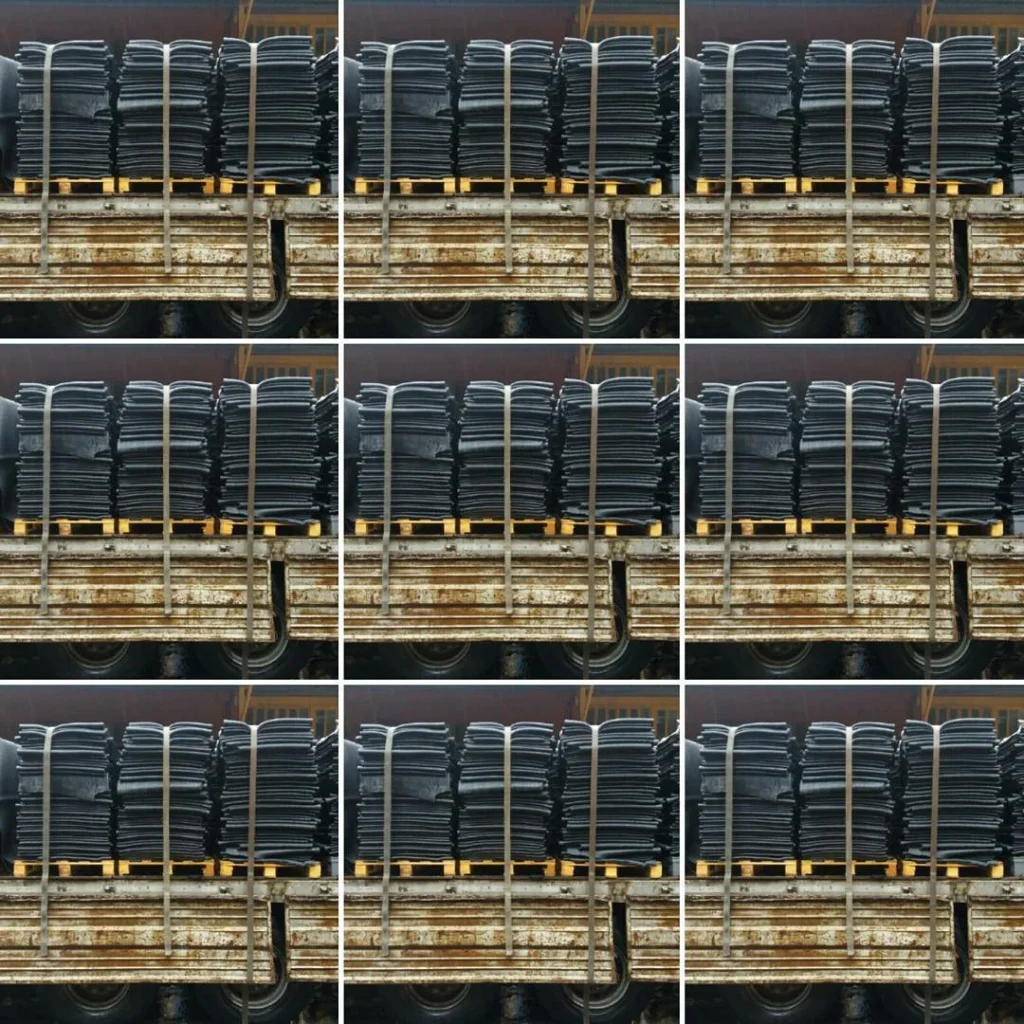
rubber compound
rubber compound
Rubber compounding is basically the process of mixing rubber with additives to improve its physical properties, such as strength, elasticity and resistance to heat, wear or chemicals. In other words, it is the mixing of natural or synthetic rubber with chemical additives. The values in the mixture vary according to the requirements of the application area.
The indispensable elements that make up the composition of the compound are the base polymer (SBR, BR, NBR, EPDM, FKM, CR, etc.), fillers, curing agents/chemicals, oils, and additives that protect the final product against ageing/deterioration.
The main application areas where rubber compound is used are:
Tyre industry.
*Automotive supply industry.
Gasket and O-ring manufacturing.
Footwear component industry.
Conveyor belt manufacturing.
*Thermal insulation industry.

SYNTHETIC RUBBER
SYNTHETIC RUBBER
Invented in the 19th century as an alternative to natural rubber, synthetic rubber is manufactured using petroleum by-products and chemicals.
The main types of synthetic rubber, according to their areas of application and basic properties, are as follows:
*SBR (STYRENE BUTADIENE RUBBER)
It is the first result of synthetic rubber research conducted under the influence of the natural rubber shortage. It can be used in all rubber applications. It has good abrasion and tear resistance. It is used at temperatures between -50°C and +100°C.
*BR (BUTADIENE RUBBER)
It is an elastic synthetic rubber type. It is used extensively in the production of truck tyres. It is also used in the footwear sector and for specialised technical products.
*EPDM (ETHYLENE PROPYLENE DIENE RUBBER)
It is the most famous type of synthetic rubber with the most common range of applications. The sectors in which it is used include flooring/asphalt, tyres, automotive, hoses, construction (external applications and insulation), technical products, etc. The main reason for this is the high resistance of this type of synthetic rubber to high temperatures (150 degrees), moisture/water, UV radiation and ozone.
*NBR (NITRILE BUTADIENE RUBBER)
It is resistant to oil, fuel and chemicals. It is used in applications that come into contact with these products: the production of gaskets, hoses, seals and safety footwear. It is also widely used in the production of gloves, balloons and condoms.
CR (CHLOROPRENE RUBBER)
It is also known by the name of neoprene. In addition to its flexibility, due to its resistance to oil, ozone and high heat (120 C), it is used in construction, refrigerator manufacturing, cable and conveyor belt production.
*IIR/BUTYL (ISOBUTYLENE-ISOPRENE RUBBER)
Due to its weather resistance, flexibility and low gas permeability, it is widely used in the production of inner tubes, gaskets and bottle caps.
*IR (ISOPRENE RUBBER)
It is used as a substitute for natural rubber and has similar physical properties. It is used in applications requiring high elasticity and tensile/tear strength.
*FKM/VITON (FLUOROELASTOMERS)
Due to its resistance to oil and chemicals, as well as its high heat resistance (230 C), it is used in defence industry, automotive, aerospace and petrochemical applications.

NATURAL RUBBER
NATURAL RUBBER
It is known that rubber first grew in the 16th century BC in Brazil, where it gets its name, on the Amazon rubber tree (Hevea brasiliensis). Until the Age of Discovery, rubber was used in ball-making and as an auxiliary material for the production of textile products and footwear. With the discoveries, the increased awareness of rubber and the intensifying industrial demand led to the rubber tree being cultivated in all tropical countries as well.
Today, the major natural rubber producing countries are Thailand, Indonesia, Malaysia, Vietnam, Sri Lanka, India, Ivory Coast, Nigeria, Cameroon, Liberia, Brazil and Venezuela.
The most prominent features of natural rubber are its high tensile strength, exceptional elasticity and superior abrasion resistance.